
5 Foods and Drinks to Avoid If You’re Taking Blood Pressure Medication, According to Experts
Source: EatingWell / By Elizabeth Shaw, M.S., RDN, CPT
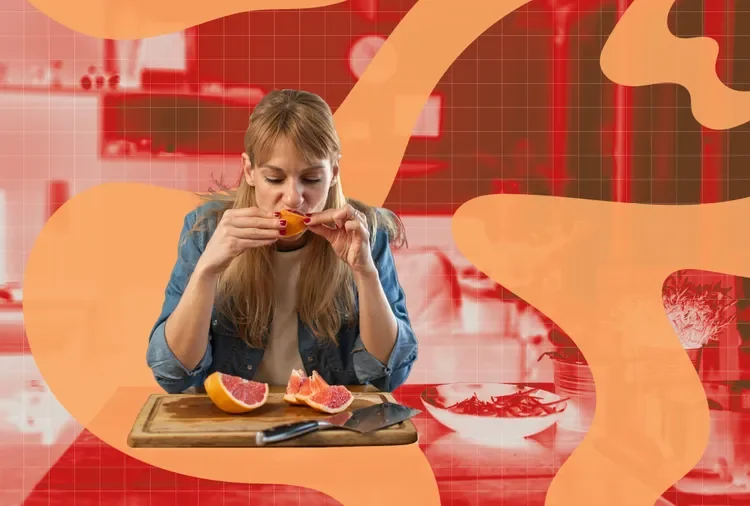
Credit: Getty Images. EatingWell design.
Key Takeaways
Medications can play a key role in managing high blood pressure.
Certain foods and beverages can increase or decrease how well your medications work.
Alcohol, grapefruit, and meals high in sodium and fat can affect a medication’s efficacy.
High blood pressure affects nearly half of all U.S. adults, yet only about 1 in 4 has it under control.1 While lifestyle habits, like a balanced diet, regular movement and avoiding smoking, remain the foundation of treatment and prevention, most people still need medication to manage their numbers.1 In fact, data show that many adults already on antihypertensive medications often need a higher dose or an additional medication to reach their target blood pressure.1
Because so many people rely on prescriptions to stay within a healthy range, it’s crucial to understand how certain foods, even nutritious ones, can influence how well those medications work. As Erika Gray, Pharm.D., explains, “You may not realize it, but the very foods you put into your mouth might be changing how well your blood pressure medications work. Certain foods can either make your medications more or less effective. In order for your blood pressure medications to work optimally, it’s important to have a steady, predictable amount of the medication in your blood at all times.”
With that in mind, we’ve highlighted the top foods and beverages to be mindful of when taking common blood pressure medications. Here’s what experts recommend discussing with your health care provider before regularly adding them to your meal routine.
1. Alcoholic Beverages
You may be over 21, but it’s best to put down that alcoholic beverage if you’re taking a beta-blocker medication to manage blood pressure. Remember, alcohol can have detrimental effects on total body health, but your blood pressure too. In fact, alcohol has been shown to increase heart rate and blood pressure, counteracting in a way many blood pressure medications that are designed to do just the opposite.2
Registered dietitian Ginger Hultin, D.C.N., RDN, CSO, shares, “Beta-blockers help to slow down heart rate and relax blood vessels, ultimately lowering blood pressure. These medications should be taken with food, but not with alcohol.” Gray also notes that increased dizziness can occur when mixing alcohol with beta-blocker usage, causing a ripple effect if you’re already sensitive to alcohol.3 Gray advises patients to limit or avoid alcohol entirely if they’re taking a beta-blocker.
2. Grapefruit & Grapefruit Juice
You may have heard that grapefruit and its juice are cautioned when taking blood thinners, but they also should be avoided if you’re taking a blood pressure medication known as a calcium channel blocker, too.4 Calcium channel blockers are a class of blood pressure medications that help the heart’s muscle cells and arteries relax by preventing calcium from entering.4 Through this mechanism, narrowed blood vessels open, allowing blood pressure to decrease.
Grapefruit and grapefruit juice can interact with the enzymes needed to break this medication down, notes Gray, leaving patients with “dangerously high levels of the drug in your blood.” When this happens, Gray shares, “patients may experience severe dizziness, low blood pressure and heart rhythm changes.”5 Hultin recommends patients avoid grapefruit and grapefruit juice entirely if taking this type of medication.
3. High-Potassium Foods
A few types of blood pressure medications, including angiotensin-converting enzyme (ACE) inhibitors, angiotensin II receptor blockers (ARBs) and potassium-sparing diuretics, can cause your body to retain potassium.6 Gray writes, “An excess of potassium in the body is known as hyperkalemia, and can be extremely dangerous, affecting heart rhythm, if not managed properly.” While there are many foods that are high in potassium that also can help lower blood pressure, like bananas and avocados, if you’re taking a blood pressure medication that is sensitive to potassium, you need to reevaluate where your nutrition comes from.7
Additionally, many items that are labeled as low-sodium actually contain salt substitutes, like potassium chloride, that can increase potassium levels further if you’re taking an ACE inhibitor, ARB or potassium-sparing diuretic. Hultin recommends reading the labels of foods that may contain salt substitutes, like frozen meals, canned soups and some shelf-stable entrees. Plus, she encourages working with a trained medical professional, like a dietitian, if you’re on one of these medications to help keep your potassium intake in a healthy balance.
4. High-Fat Meals
You don’t need to avoid all high-fat meals if you’re on a beta-blocker, but one type—immediate-release propranolol—should be avoided with high-fat meals.8 Remember, dietary fat digests more slowly in the digestive system, meaning your body may not process medications taken with a high-fat meal the same way it would without food. Gray shares, “Higher fat meals can increase the absorption of propranolol in unpredictable ways. To ensure consistent results, it is best to take this medication on an empty stomach (one hour before or two hours after eating).”8
5. Sodium-Rich Foods
While it’s good practice for patients with high blood pressure to be mindful of their sodium intake, it’s especially important when taking certain blood pressure medications, such as ACE inhibitors. By nature, ACE inhibitors are designed to help the body produce less angiotensin, a chemical that causes narrowing of the arteries.6 This helps lower blood pressure by allowing the blood vessels to relax and open up.6 Hultin shares, “Patients taking an ACE inhibitor medication may be advised to follow a low-salt diet, and should use caution with potassium salt substitutes or potassium-containing supplements,” as noted above.