

A.A. Certification
The Objective
Since the 19th century, the rise of processed foods has driven the development and widespread application of numerous food additives to meet mass production demands. Consequently, international organizations—such as the World Health Organization (WHO) and the Food and Agriculture Organization of the United Nations (FAO)—alongside national food and drug regulatory authorities, have established strict regulations and conducted rigorous assessments to mitigate potential risks to human health.
Furthermore, the Codex Alimentarius Commission has established comprehensive food labeling standards and guidelines that have been adopted by a majority of nations. Under these frameworks, food manufacturers are obligated to fully disclose any additives within their products. For instance, the European Union regulates food additives under the “E-number” system, advising individuals with specific allergies or sensitivities to meticulously review product labels.
The Anti-Additive Clean Label Organization (A.A.) is dedicated to encouraging the food service and manufacturing industries to eliminate food additives from both their retail operations and entire production processes. Accredited by European certification standards, our organization operates as an independent and impartial third-party body. We provide rigorous certifications for additive-free production processes, food sugar content, and additive-free pet food.
To ensure absolute objectivity, we invite renowned experts and scholars from relevant fields to serve on our advisory board. All certification assessments are executed through independent external audits, strictly adhering to conflict-of-interest avoidance principles. By implementing these certification standards, A.A. seeks to drastically reduce reliance on food additives, eliminate unnecessary supplementary ingredients, and provide consumers with a broader selection of premium products—ultimately safeguarding public health and consumer rights.
Beyond the culinary sector, the demand for "clean" products in everyday consumer goods and various lifestyle categories has gained significant global traction in recent years. Empowering consumers to clearly identify product compositions and materials, while ensuring the consistency of production standards across the entire supply chain, has emerged as a critical societal priority.
Household and Daily-Use Products: We evaluate raw materials and manufacturing processes to mitigate the potential impact of harmful substances on human health and the environment. This enhances overall product safety and transparency, empowering consumers to make informed choices with absolute confidence.
Baby Care: Prioritizing maternal and infant well-being, we assess products based on ingredient safety and manufacturing integrity. We ensure the complete absence of harmful additives or restrict usage to strictly low-risk substances, thereby delivering the highest standard of protection and care for both newborns and mothers.
High-Protein Products: Guided by international nutritional standards, our certification verifies the authenticity of protein sources and exact content. This prevents misleading claims and inappropriate fortification, ultimately strengthening market trust and assuring premium product quality.
Cosmetics and Personal Care: Following stringent international regulatory frameworks, our evaluations ensure uncompromising ingredient safety and process compliance. We strictly prohibit harmful or controversial substances, championing the long-term health and safety of users.
Veterinary and Agricultural Pharmaceuticals: We conduct exhaustive risk assessments on drugs utilized in agriculture and animal husbandry to ensure strict regulatory compliance. By minimizing chemical residue levels, we actively safeguard the food supply chain and maintain ecological balance.
Non-Leaching (Substance Migration) Standards: We examine materials for the risk of chemical release or migration during prolonged use. This reduces potential hazards to human health and the environment, establishing a far more rigorous safety benchmark for durable goods.
ESG (Environmental, Social, and Governance): We integrate comprehensive ESG criteria to evaluate corporate sustainability performance and responsible business practices. This holistic approach promotes corporate transparency, accountable management, and the creation of enduring social value.
We warmly invite producers who share our commitment to minimal or zero additive usage, and who champion the concept of clean products, to join the A.A. Certification. Together, we can drive the future of global sustainable development.
A.A. Certification is firmly grounded in the United Nations Sustainable Development Goals (SDGs), utilizing WHO and EU regulatory frameworks as our benchmark.
The Process of Certification
Submit the Application
1 |
|
Submit the Documents
2 |
|
Conduct Comprehensive Examination
3 |
|
Certification Completed
4 |
|
Why Should I Sign Up for the A.A. Certification?

|
Export AssistanceProvide strategic access to overseas market resources. |

|
Corporate Welfare CommitteeFacilitate brand promotion and group purchasing initiatives. |

|
Multichannel MarketingEnhance brand exposure across e-commerce and physical retail channels. |

|
A.A. Taste Awards ResourcesLeverage international award resources to elevate brand value and market recognition. |

|
Cross-Industry AlliancesFoster strategic partnerships to create synergistic new business opportunities. |

|
A.A. Special ProgramsAccess exclusive association benefits, including specialized product insurance and SGS inspection services. |
Complying with SDGs Core Objectives to Achieve Sustainable Development and Social Benefits
According to the United Nations' 2030 Sustainable Development Goals (SDGs), the framework contains 17 core goals, encompassing 169 targets and 230 indicators designed to guide global collaborative efforts toward sustainability. A.A. is deeply committed to upholding SDG values—particularly concerning Zero Hunger, Good Health and Well-Being, Clean Water and Sanitation, Responsible Consumption and Production, Climate Action, Life Below Water, Life on Land, and Partnerships for the Goals. Driving all forms of sustainable development remains the ultimate objective and social benefit that A.A. strives to achieve.
The Fairness of Third-Party Certification
To be truly effective, third-party certification across all business activities must be open, transparent, and equitable. A certifying body must possess absolute authority and prestige. It must operate independently of both the first and second parties, harboring no financial conflicts of interest, while maintaining an obligation to protect the rights of all involved stakeholders to secure their full trust. Furthermore, a third-party organization bears the social responsibility of enhancing mutual trust between producers and consumers, governments and producers, and governments and consumers.
In international trade, obtaining recognized certification is crucial for a product's market acceptance. Therefore, the quality of the certification process is the key to maintaining the system's credibility. Through an impartial third-party certification system, an agency qualified to meet international standards performs rigorous document reviews, on-site audits, and sampling inspections. The agency verifies compliance and ensures continuous conformity through follow-up inspections and random market sampling. To facilitate consumer identification and traceability, the certification agency's name, product name, traceability code, and disclosure methods must be clearly marked, ultimately achieving environmental sustainability through a robust gatekeeping mechanism.
Upgrading Goodwill and Brand Image
Our industry experts provide specialized advisory services to adjust current production processes to meet stringent certification standards. Upon compliance, the manufacturer is awarded the A.A. authorized certification label, allowing consumers to easily identify their additive-free products. Consequently, the manufacturer’s market visibility significantly increases, driving enhanced product differentiation and elevating the overall brand image.
Win-Win Marketing Campaigns
A.A. organizations worldwide continually organize diverse campaigns to promote additive-free products and concepts. These initiatives drastically increase manufacturer exposure, establish positive consumer interactions, and subsequently boost operating profits for certified producers.
Interdisciplinary Communication
A.A. utilizes various platforms to share practical insights regarding industry shifts and production technology advancements. This ensures that every A.A. member has immediate access to the latest industry dynamics. Such cross-disciplinary exchange further stimulates innovation across all fields.
Accessing the Latest Global Information on Additive-Free Processes
Every A.A. branch actively hosts domestic and international industry conferences, seminars, educational training sessions, and promotional events. Members participating in our advisory programs gain access to relevant subsidies, exclusive benefits, and the latest production technology intelligence.
Immediate Access to International and Local Regulations
In addition to advising manufacturers on the latest regulatory updates in various countries, A.A. serves as a vital bridge between global governments and producers. This ensures manufacturers receive real-time intelligence on international laws and regulations. Whether navigating international trade or penetrating new markets, this immediate regulatory insight fosters positive, effective interactions between the industry and regulatory bodies.
How Does the Certification Advisory Process Work?
Contact us via email or phone to apply for the A.A. advisory mechanism.
The A.A. team will promptly dispatch representatives to conduct an in-depth review of your operational procedures or manufacturing details to formulate a customized advisory plan.
Under the supervision of professional experts, we guide the gradual adjustment of your production processes to successfully achieve A.A. Certification.
The Process of Certification
1
2. Submit required documentation
3. Review completed within 15 days upon receipt of application materials
1-1 New Applicants: Proceed to 2
1-2 Previous Applicants: Proceed to 4
2
3
4
5
6
4-2-1 May re-apply one year from the date of disqualification.
7
1
2
3
4
5
6
7
8
9
Pass10
11
12
10 (Re-application permitted after 1 year)
13
Documents Required to Apply for A.A. Certification and Advisory
|
|
|
|
|
|
|
|
Interested in Joining Us?
Contact Us · Pay Application Fee
Certification Principles
In the food sector, using additives to alter the taste of ingredients or the texture and physical properties of products is strictly prohibited.
The use of additives to reduce production time or simplify manufacturing processes is prohibited.
The use of additives to excessively extend the shelf life of products is prohibited.
In the food service sector, ingredients shall not be industrially pre-manufactured products; they must be processed and prepared within the operating premises.
Across all certification categories, personnel, operational environments, facility hygiene management, and quality assurance systems must comply with applicable Good Hygiene Practices.
In the field of consumer goods, the use of additives to artificially enhance cleaning performance is prohibited.
Likewise, the use of additives to artificially modify the visual presentation of products or to excessively intensify olfactory perception is prohibited.
Products and their manufacturing processes must have no adverse impact on human health, or ensure that any such impact is minimized to the absolute lowest possible level.
Operations must remain respectful of animals, plants, and the overall environment.
Manufacturing processes shall not result in excessive resource consumption, increased carbon footprints, or negative environmental impacts.
International standards or guidelines based on the Clean Development Mechanism (CDM)—such as DIN, SGS, or equivalent frameworks—shall be followed to ensure the transparency, comparability, and credibility of reported information.
The certification process includes a thorough assessment of compliance with the principles of the UN Sustainable Development Goals (SDGs).
Note: Issues related to ingredient traceability, such as organic certification or the geographical origin of raw materials, fall outside the scope of A.A. certification. For consumer goods and other categories, the permissibility of specific additives is determined by the corresponding certification category and tier, strictly excluding any substances fully prohibited under European Union regulations.
Commonly Prohibited Food Additives
In accordance with local Food Safety and Hygiene Management Laws, the Anti-Additive Clean Label Organization categorizes common additives into the following main groups:
Flavor Enhancers: Synthetic or refined condiments used to increase food flavor, such as monosodium glutamate (MSG), chicken bouillon powder, and stock cubes.
Bleaching Agents: Including hydrogen peroxide, sulfites, and benzoyl peroxide.
Phosphates: Including potassium (or calcium) dihydrogen phosphate, potassium (or sodium) metaphosphate, potassium (or sodium) pyrophosphate, and potassium (or sodium) polyphosphate.
Quality Improvers: Including color-retaining agents, leavening agents, thickeners, industrial food chemicals, and emulsifiers.
Artificial Colors: Including synthetic food coloring, titanium dioxide, and caramel color.
Artificial Flavors: Encompassing all synthetic flavoring agents.
Preservatives: Including sorbic acid, benzoic acid, dehydroacetic acid, and calcium propionate.
Artificial Antioxidants: Including butylated hydroxytoluene (BHT), butylated hydroxyanisole (BHA), and tertiary butylhydroquinone (TBHQ).
Note on Sweeteners: Sweeteners are food additives utilized to impart sweetness to food or feed. Sugar substitutes, for instance, are low-calorie alternatives frequently added to dietary foods. While they assist in managing caloric intake and offer significant convenience to diabetic patients, they remain additives. Conversely, natural substances like sucrose, beet sugar, and honey are classified as standard food raw materials.
EU Authorization for Certification Services
The Anti-Additive Clean Label Organization is officially authorized by the European Union to execute certification services. Under the strict supervision of the EUIPO, we conduct rigorous inspections to ensure full compliance with E-number standards.
Certification Standards and Advisory Tiers
Restaurant & Food Anti-Additive Certification
A.A. Clean Label Certified One Star: Free from commonly used flavor enhancers, bleaching agents, and phosphates.
A.A. Clean Label Certified Two Stars: Free from flavor enhancers, bleaching agents, phosphates, quality improvers, artificial colors, and artificial flavors.
A.A. Clean Label Certified Three Stars: Free from flavor enhancers, bleaching agents, phosphates, quality improvers, artificial colors, artificial flavors, preservatives, and artificial antioxidants.
A.A. Clean Label 100% Additive-Free: Absolutely free from all food additives listed under the local competent authority's (e.g., FDA) specific standards and limitations for food additives.
A.A. Clean Label Advisory Member: Recognized for aligning with the anti-additive philosophy, willing to collaboratively promote this concept, or actively receiving A.A. advisory services to achieve formal certification.
Sugar Content Certification
Certifying foods with no added sugar, reduced sugar, or related sweetening substances.
A.A. Clean Label Sugar-Free: Contains no sweeteners, sugar substitutes, or syrups. Compliance criteria: Sugar content does not exceed 0.5 grams per 100 grams of solid, semi-solid, or liquid product.
A.A. Clean Label Low Sugar: May contain sweeteners, sugar substitutes, syrups, and natural sugars. Compliance criteria: Sugar content does not exceed 5 grams per 100 grams of solid/semi-solid product, and does not exceed 2.5 grams per 100 grams of liquid product.
A.A. Clean Label Real Sugar (Natural Sugar): Contains no artificial sweeteners, sugar substitutes, or syrups; exclusively utilizes natural sugars.
Pet Food Certification
A.A. Clean Label Certified One Star: Free from flavor enhancers, bleaching agents, and phosphates.
A.A. Clean Label Certified Two Stars: Free from flavor enhancers, bleaching agents, phosphates, quality improvers, artificial colors, and artificial flavors.
A.A. Clean Label Certified Three Stars: Free from flavor enhancers, bleaching agents, phosphates, quality improvers, artificial colors, artificial flavors, preservatives, and artificial antioxidants.
A.A. Clean Label 100% Additive-Free: Absolutely free from all food additives listed under the local competent authority's (e.g., FDA) standards.
A.A. Clean Label Advisory Member: Recognized for aligning with the anti-additive philosophy and actively working toward formal certification.
Daily Necessities Certification
Fast-Moving Consumer Goods (FMCG) regulations are established by governments and international organizations to protect public health and the environment, ensuring consumers can make informed purchasing decisions. These regulations frequently restrict or outright prohibit specific additives. For instance, the European Union's list of toxic substances designates numerous chemicals as hazardous. Furthermore, the EU enforces extensive regulations and guidelines—such as the Cosmetics Directive and the Toxic Substances Control Act—to strictly govern the use of surfactants and organic solvents.
The following commonly used additives in consumer goods may pose adverse risks to the human body or the environment:
Silicones (Dimethicone): Frequently utilized in hair care products to improve texture, but may induce skin irritation, trigger sensitivities, or detrimentally alter hair texture over prolonged use.
Phosphates: Commonly found in cleaning products; these can cause skin irritation and significantly contribute to environmental pollution.
Surfactants: Widely used in cleaning products and cosmetics; potential triggers for skin irritation and prominent environmental pollutants.
Organic Solvents: Heavily relied upon in cleaning products, posing substantial environmental hazards and potential systemic risks to human health.
As consumer awareness regarding personal health and environmental safety intensifies, there is a growing preference for products completely free from potentially harmful substances. Our organization assists in evaluating the direct and indirect impacts of additives used in daily consumer goods. By addressing the long-term, chronic effects often overlooked in daily life, we accurately determine the safety risks these products pose.
List of Clean Label Standards
A.A. Clean Label Certified One Star: Free from fluorescent agents, bleaching agents, phosphorus, silicones, and mineral oil.
A.A. Clean Label Certified Two Stars: Free from fluorescent agents, bleaching agents, phosphorus, silicones, mineral oil, artificial colors, and preservatives.
A.A. Clean Label Certified Three Stars: Free from fluorescent agents, bleaching agents, phosphorus, silicones, mineral oil, artificial colors, preservatives, petrochemical surfactants, foaming agents, and water softeners.
A.A. Clean Label 100% Additive-Free: Free from fluorescent agents, bleaching agents, phosphorus, silicones, mineral oil, artificial colors, preservatives, petrochemical surfactants, foaming agents, water softeners, synthetic fragrances, and thickeners.
(For additional details regarding practical certification procedures, please contact your regional A.A. office.)
Baby Care Certification
Newborns represent the future and require the utmost care and attention during their crucial developmental stages. They must be shielded and provided with the highest standard of care to ensure healthy growth. This principle equally applies to the mothers who nurture them, as maternal health plays an indispensable role in infant development.
Products impacting the health and well-being of newborns and mothers span diverse categories, including diet, health and personal care products, clothing, educational toys, cleaning supplies, transportation items, home furnishings, and electronic appliances. With rapid technological advancements, safeguarding both mother and child from harmful environmental factors has become increasingly critical.
The A.A. Clean Label – Baby Care program prioritizes maternal and infant health through rigorous evaluations anchored in our anti-additive certification standards. Aligning perfectly with EU regulations and the Codex Alimentarius Commission, this initiative enforces the highest care standards across all product categories. Diet remains a pivotal determinant of health; therefore, we meticulously verify product specifications to guarantee that all maternal and infant foods are genuinely additive-free and pose zero health risks.
Relevant EU Regulations:
1. Food Allergens: EU Regulation 1169/2011 on the Provision of Food Information to Consumers (FIC) mandates comprehensive labeling for pre-packaged foods. The EU officially recognizes 14 major allergens (e.g., gluten-containing cereals, crustaceans, peanuts, soybeans, milk, tree nuts). Product labeling must distinctly highlight these allergens using differentiated fonts, sizes, or background colors.
Contact Skin Allergens: EU Regulation 1223/2009 stipulates that any of the 26 officially recognized allergenic substances present in cosmetics must be explicitly declared on the product packaging. EU legislation continuously evolves to guarantee consumer protection, enforcing strict chemical limits (e.g., nickel content ≤ 0.5%) and updating Annex III following comprehensive public consultations.
(For additional details regarding practical certification procedures, please contact your regional A.A. office.)
High-Protein Certification
The health and fitness industry has witnessed a massive surge in the popularity of high-protein diets. Driven heavily by media promotion, both producers and consumers are increasingly focused on this trend. However, the quality of high-protein products on the market varies drastically. While many products genuinely offer high protein content, others fall significantly short of their claims, fueling a rise in artificially modified products and generating widespread consumer skepticism.
To address this critical issue, the EU has implemented stringent regulations to guarantee the safety and efficacy of high-protein products. Functioning as an authoritative third-party organization, the A.A. Clean Label provides robust certification for products that are authentically high in protein and free of synthetic additives. This certification empowers consumers to make confident purchasing decisions while elevating overall industry transparency.
According to European Union (EU) regulations, a food can only claim to be "high in protein" if protein accounts for at least 20% of the product's total energy value. Alternative proteins must rigidly comply with EU food laws, notably Regulation (EC) No 1924/2006. Recognizing the market's demand for authenticity, the A.A. Clean Label delivers impartial third-party certification to foster unshakable product trust.
Note: Subject to local government requirements, products in certain regions must explicitly indicate a protein content of 20% or higher.
Regulation (EC) No 1924/2006
*Regulation (EC) No 1924/2006 of the European Parliament and of the Council of 20 December 2006 on nutrition and health harmonizes provisions across member states regarding nutrition and health claims on food. It established an EU-wide register for recording authorized nutrition and health claims, effectively standardizing safety and marketing claims.
(For additional details regarding practical certification procedures, please contact your regional A.A. office.)
Cosmetics Certification
Cosmetics Regulation (EC) No 1223/2009 serves as the primary regulatory framework for finished cosmetic products introduced to the EU market. This vital legislation impacts cosmetics manufacturers, importers, and ingredient suppliers alike. Crucially, the regulation categorically prohibits the marketing of final formulas, specific ingredients, or finished cosmetic products that have been subjected to animal testing. Grounded in these uncompromising EU standards, our certification rigorously inspects all applicable products worldwide.
Referring to the official EU Cosmetic Ingredient Database (CosIng), we strictly monitor:
Annex II: Prohibited Substances
Annex III: Restricted Substances
Annex IV: Permitted Colorants
Annex V: Permitted Preservatives
Annex VI: Permitted UV Filters
Compliance with the ban on animal testing - Testing ban, Marketing ban
We assist cosmetic manufacturers in evaluating product safety prior to market launch, ensuring all foreseeable conditions of use remain unequivocally safe for human health.
(For additional details regarding practical certification procedures, please contact your regional A.A. office.)
Pesticide & Drug Free : Standards for Veterinary Drug Use
In contemporary agricultural practices, raising food-producing animals relies heavily on pharmacologically active compounds. The strategic use of veterinary drugs is essential for maintaining animal health and welfare, forming a fundamental pillar of the agricultural economy.
There are five primary classifications of drugs utilized in this sector:
Topical Antiseptics, Bactericides, and Fungicides: Used to treat superficial skin or hoof infections, cuts, and abrasions.
Ionophores: Administered to alter rumen microflora, providing more efficient energy substrates during feed conversion and imparting protection against specific parasites.
Steroid Anabolic Growth Promoters and Peptide Enhancers: Including hormone-like compounds and recombinant bovine somatotropin used to increase dairy milk yields.
Anti-Parasitic Drugs.
Antibiotics: Utilized to control overt and occult diseases, and historically, to promote growth.
Other UN and EU restriction standards.
Our organization assists in comprehensively evaluating veterinary drug usage, administration protocols, and therapeutic processes in food animal production. Guided by UN and EU restriction standards, we accurately determine and mitigate the specific risks associated with pharmacological residues in the food supply.
(For additional details regarding practical certification procedures, please contact your regional A.A. office.)
Non-Leaching (Harmless Material) Certification
Substances of Very High Concern (SVHCs) are chemical substances listed under the Annexes of the European Union's REACH Regulation. Under certain conditions, these substances can trigger severe, irreversible adverse effects. As society rapidly industrializes, advancements in science have made material leaching detection exceptionally precise. For industrial materials and consumer goods, establishing stringent health standards is paramount to reducing the chronic, long-term impacts of micro-leaching.
Regarding the non-leaching or release of substances in daily consumer goods, the EU REACH Regulation highlights five primary concerns regarding SVHCs:
Toxicity: Specific SVHCs may exhibit systemic toxicity, inducing severe damage to critical organs such as the kidneys and liver.
Reproductive Toxicity: Certain SVHCs can severely impair the reproductive system and overall fertility.
Carcinogenicity: Numerous SVHCs are known carcinogens, significantly escalating human cancer risks.
Environmental Degradation: Specific SVHCs lack biodegradability, persisting in ecosystems and causing long-term environmental damage.
Other Adverse Effects: Beyond the aforementioned risks, specific SVHCs may inflict irreversible damage to the immune or central nervous systems.
Our organization assists in the rigorous assessment of materials utilized in the production of daily consumer goods. By addressing the long-term, chronic neglect of direct and indirect human exposure, we accurately determine and mitigate the migration risks associated with these everyday materials.
Leachables are verified against the specific substances relevant to each product category, such as Bisphenol A (BPA) for containers, PFAS for paper products, microplastics for various household goods, and PTFE for cookware and tableware, among others.
(For additional details regarding practical certification procedures, please contact your regional A.A. office.)
A.A. Low Carbon Certification
Substantive Carbon Reduction and Material Reduction Verification
(For additional details regarding practical certification procedures, please contact your regional A.A. office.)
A.A. Circularity Certification
Recycling, Reprocessing, and Circular Use Verification
(For additional details regarding practical certification procedures, please contact your regional A.A. office.)
ESG Certification
ESG (Environmental, Social, and Governance) serves as the definitive standard for measuring the sustainability and societal impact of a company or organization. It comprehensively evaluates a company's performance across environmental management, employee and customer relations, corporate responsibility, and ethical practices. Today, investors, consumers, and key stakeholders heavily rely on ESG criteria to assess an organization's long-term sustainability.
There are numerous methodologies for measuring and reporting ESG performance, tailored to an organization's specific strategic priorities:
Standardized Reporting Frameworks: Established frameworks guide corporate ESG reporting, including the Global Reporting Initiative (GRI), the Sustainability Accounting Standards Board (SASB), and the Task Force on Climate-Related Financial Disclosures (TCFD).
ESG Ratings and Rankings: Prestigious organizations such as MSCI, S&P Global, and FTSE Russell issue comprehensive ratings that evaluate corporate ESG performance.
Customized Reporting: Organizations may develop proprietary ESG reporting metrics that tightly align with their unique strategic objectives.
Independent Third-Party Verification: To ensure reporting accuracy, companies engage independent third parties—such as accredited certification bodies—to verify their ESG data through rigorous on-site assessments and document audits.
Drawing on years of successful experience in A.A. Clean Label product counseling and auditor deployment, our organization has developed a highly practical methodology. We translate this hands-on expertise into actionable ESG evaluations for enterprises, ensuring a more timely and efficient process. Utilizing the four aforementioned methods as a framework, we measure and assess a company's ESG performance and certification status from a truly practical perspective.
(For additional details regarding practical certification procedures, please contact your regional A.A. office.)
TOTALLY TRUE Certification
TOTALLY TRUE signifies absolute operational transparency. It ensures that an enterprise adheres to the highest principles of transparency across all aspects of its operations, from product manufacturing to consumer relations. A company's commitment to diligence and product responsibility is the bedrock upon which consumer trust is built. Certified businesses are dedicated to transparently revealing the truth and strictly avoiding any deceptive practices, thereby protecting consumer rights while preserving the trust they have painstakingly built over the years.
Under the TOTALLY TRUE standard, the entire enterprise process is transparently inspected and verified. A rigorous third-party evaluation assesses this transparency in accordance with relevant European standards, encompassing product manufacturing quality, registration and information disclosure, authentic marketing, channel responsibility, after-sales service, and dispute warranty. By evaluating these core metrics, A.A. ensures that the operational integrity of the business is validated and consumer interests are fully protected.
For instance, when a brand publicly claims its product to be the "best-selling," "most efficient," or "most authoritative" within a specific field, the A.A. Totally True mechanism rigorously verifies these assertions. A.A. assists various third-party organizations across multiple industries to ensure that all product descriptions and marketing claims are entirely factual and accurate.
Manufacturing Quality: Evaluates whether the enterprise strictly adheres to standard additive regulations and other essential manufacturing requirements.
Registration and Disclosure: Evaluates whether the company accurately and transparently labels product information as required by law.
Authentic Marketing: Evaluates whether the credit guarantees and marketing claims provided by the company are authentic and credible.
Industry Responsibility: Evaluates whether the enterprise actively undertakes corporate social responsibility (CSR), particularly concerning carbon emission reductions.
After-Sales Service: Evaluates the company's efficiency and responsiveness to consumer inquiries regarding its products.
Dispute Warranty: Evaluates whether the company provides appropriate and fair warranty resolutions following verified consumer disputes.
Through a comprehensive assessment of the transparency of the entire enterprise process, the organization helps companies ensure the trust they have accumulated in their operations and further protect the rights and interests of consumers. The whole process of enterprise standards is transparently inspected and verified.
Note: Relevant EU Regulatory Frameworks The TOTALLY TRUE certification aligns with stringent EU standards to help enterprises guarantee product quality, elevate service levels, and protect consumer rights simultaneously:
Manufacturing Quality: EU Manufacturing Quality Guidelines (IQC-9 / CQI-9) stipulate the fundamental principles and control requirements that must be followed during manufacturing to ensure product quality and consistency.
Registration and Disclosure: EU Consumer Quality Legislation (CE Marking) requires companies to accurately mark their products, ensuring consumers fully understand fundamental product characteristics and safety standards.
Misleading Marketing: The Unfair Commercial Practices Directive prohibits businesses from employing false, deceptive, or misleading marketing tactics.
Channel Responsibility: Corporate Social Responsibility Directive (CSRD) governs corporate mandates for carbon emission reductions and societal impact.
Dispute Guarantees: European Consumer Protection Legislation ensures fair resolution protocols for consumer grievances.
(For additional details regarding practical certification procedures, please contact your regional A.A. office.)
Halal Plus Certification
A standard Halal-certified product complies with a rigorous series of manufacturing standards dictated by Islamic Law (Shariah). These standards regulate all product aspects, including ingredients, animal feed, slaughtering practices, manufacturing processes, hygiene, safety requirements, packaging, labeling, and transportation.
Building upon these foundational principles, A.A. Halal Plus introduces an even stricter assessment of product cleanliness, hygiene, and raw material integrity, establishing a premium standard for modern consumers:
Natural Ingredients: Absolutely no artificial fragrances, colors, preservatives, or synthetic additives.
Simple Formulation: Utilizing fewer chemical components and relying on recognizable, natural ingredients.
Transparency: Full disclosure regarding raw material sourcing and product manufacturing processes.
Minimal Processing: Employing processing techniques that closely mirror natural, artisanal methods rather than heavy industrial manipulation.
In accordance with our strict additive specifications, the A.A. Organization thoroughly verifies that products simultaneously meet orthodox Halal standards and our elevated cleanliness requirements.
(For additional details regarding practical certification procedures, please contact your regional A.A. office.)
Restaurant & Food Anti-Additive Certification
100% Additive-Free
Three Stars
Two Stars
One Star
Guidance
Certification Fee | 100% Additive-Free: €5,600 / per item | Standard Certification: €3,360 / per item | Guidance Fee: €300 / per item
Sugar Content Certification
Real Sugar

Low Sugar
Sugar-Free
Certification Fee | Calculated according to the number of products. Single item verification fee: €3,360 / per item
Pet Food Anti-Additive Certification
Three Stars
Two Stars
One Star
100% Additive-Free
Certification Fee | 100% Additive-Free: €5,600 / per item | Standard Certification: €3,360 / per item
Daily Necessities Certification
Three Stars
Two Stars
One Star
Halal Plus Certification


Baby Care Certification


High-Protein Certification
Cosmetics Certification
Three Stars
Two Stars
One Star
Veterinary and Agricultural Residue Certification


Non-Leaching (Harmless Material) Certification
Low Carbon Certification
Substantive Carbon Reduction and Material Reduction Verification
Circularity Certification
Recycling, Reprocessing, and Circular Use Verification
ESG Certification


TOTALLY TRUE Certification
On-Pack Label Applications
Note: All listed fees are assessed on an annual basis. In the event of force majeure, the Anti-Additive Clean Label Organization reserves the right to amend pricing or extend timelines.
Join the Certification Guidance Program
NNote: Some brands participate as Members under Guidance. Their product formulations are currently undergoing revision and have not yet obtained formal certification. Once the improvements are successfully completed and pass our rigorous inspection, A.A. will officially announce them as certified products.
Contact Us
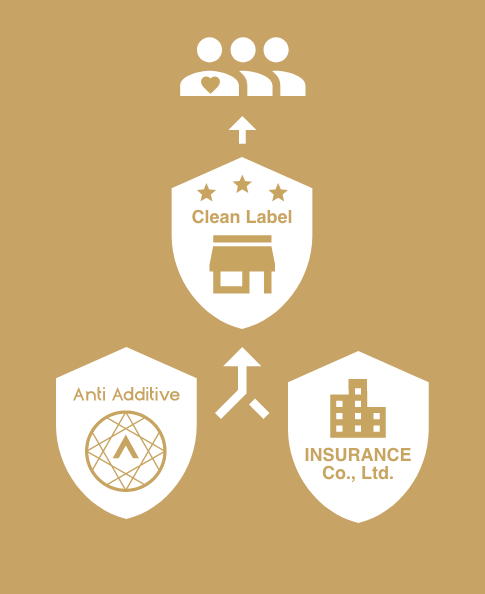
Project Insurance Services
A.A. has established a fair and rigorous verification system to ensure the absolute integrity of the food manufacturing process. Our ultimate goal is to foster a stable, additive-free dietary environment for global consumers.
We recognize that sustainable corporate operations require robust risk management. Through strategic cross-industry cooperation, we assist enterprises in mitigating financial, supply chain, management, and increasingly severe environmental risks.
All A.A. certified brands and advisory members are entitled to exclusive membership privileges. This includes access to professional consulting for comprehensive corporate protection policies, encompassing:
Public Liability Insurance
Commercial Fire Insurance
Product Liability Insurance
Employer’s Compensation & Liability Insurance
Cargo & Transportation Insurance
If you are interested in reinforcing your enterprise's risk management strategy, please contact your regional association, and our team will assist you in initiating the consultation process.
Contact Us
— Rights and Obligations—
Rights and Obligations of A.A.
A.A. reserves the right to announce any changes to certification procedures, regulations, or requirements via its official website.
A.A. shall maintain and update the directory of certified operators on its official website or announce them through other designated official channels.
A.A. shall issue official certificates, verification stickers, or commemorative wooden plaques (exclusive to Three-Star ratings) to operators who successfully pass the certification process.
Participants awarded a One-Star or Two-Star rating may apply separately for physical stickers or wooden plaques upon successfully passing the certification.
Certified operators will receive exclusive newsletters containing the latest updates on government regulations and A.A. initiatives. Furthermore, they are eligible to participate in all professional seminars and courses organized by A.A. (Please refer to the official website for details).
Certified operators are eligible to submit entries for the A.A. Taste Awards.
Applicants for A.A. Certification are granted a one-year authorization to utilize the A.A. Visual Identity (VI) Guidebook (strictly restricted to digital platforms).
A.A. may periodically facilitate media exposure for selected certified operators based on media inquiries and promotional opportunities.
Rights and Obligations of the Operator
Operators must submit authentic documentation required for the relevant certification and fully cooperate with A.A. during the information-gathering process.
Operators must consent to the initial application audit arranged by A.A., as well as subsequent scheduled or unannounced follow-up inspections.
Operators must fully endorse the anti-additive philosophy and demonstrate a proactive willingness to systematically eliminate artificial additives.
Operators shall collaborate with A.A. to actively promote the spirit of the Clean Label movement.
Operators are highly encouraged to attend and participate in public events hosted by A.A.
Operators are encouraged to recommend A.A. certification to industry peers who are willing to commit to additive-free food and beverage practices.
Upon successful certification, operators shall grant A.A. the royalty-free right to disclose their establishment and product information across various A.A. platforms (including promotional materials, websites, and mobile applications) to serve as a reliable reference for consumers.
Grounds for Certification Revocation
Should A.A. determine that a certified operator is involved in any of the following circumstances, A.A. reserves the right to immediately revoke the operator's authorization to use the certification, stickers, and wooden plaques, requiring their prompt return. The operator will be strictly barred from re-applying for a period of one year from the revocation date. If an operator has passed the on-site audit but is found in violation prior to issuance, A.A. shall withhold all certification materials.
The operator's certificate has expired without a timely renewal application.
The operator permanently ceases business operations.
The operator is found to have introduced food additives strictly prohibited by A.A. certification regulations during the food or beverage preparation process.
The operator utilizes food or beverage ingredients that violate local governmental health and safety regulations.
The operator explicitly fails to pass subsequent compliance assessments.
The operator relocates their dining establishment without notifying A.A., resulting in a mismatch with the registered application or certificate address.
The operator is involved in other severe violations of the certification agreement or ethical business practices.
Confidentiality Obligations
A.A. strictly maintains the confidentiality of all proprietary data and information provided by the operator.
A.A. shall not use, disclose, or reproduce confidential information, except as required by authorized employees, evaluation committee members, and professional consultants directly involved in the provision of certification services.
Confidential information shall be utilized exclusively for certification purposes. However, this confidentiality obligation does not apply to information that:
Is already in the public domain at the time of disclosure, or subsequently becomes public through no fault or negligence of A.A.
Is legally obtained by A.A. from a third party not bound by confidentiality obligations to the operator.
Was already in A.A.'s possession prior to the application, as evidenced by written records.
Is independently developed by A.A. personnel without referencing the operator's confidential data, as evidenced by written records.
Is required to be disclosed by law, regulation, or a direct mandate from a governmental authority.
EU Authorization for Certification Services
The Anti-Additive Clean Label Organization is officially authorized by the European Union to execute certification services. Under the strict supervision of the EUIPO, we conduct rigorous inspections to ensure full compliance with E-number standards.
The inspection scope is as follows:
allspice; almond paste; almond confectionery; baking powder; baking soda [bicarbonate of soda for cooking purposes]; bicarbonate of soda for cooking purposes [baking soda]; baozi [stuffed buns]; barley meal; batter mixes for okonomiyaki [Japanese savoury pancakes]; batter mixes for okonomiyaki [Japanese savory pancakes]; bean meal; biscuits; cookies; bread; bread rolls; breadcrumbs; buckwheat, processed; buckwheat flour; bulgur; buns; burritos; cake powder; cake batter; cake dough; cake frosting [icing]; cakes; candy; candy decorations for cakes; capers; caramels [candy]; celery salt; cereal preparations; cereal bars; cereal-based snack food; chamomile-based beverages; cheeseburgers [sandwiches]; chewing gum; chewing gum for breath freshening; chicory [coffee substitute]; chips [cereal products]; chocolate; chocolate beverages with milk; chocolate mousses; chocolate decorations for cakes; chocolate spreads containing nuts; chocolate-based beverages; chocolate-based spreads; chocolate-coated nuts; chow-chow [condiment]; chutneys [condiments]; cinnamon [spice]; cloves [spice]; cocoa; cocoa beverages with milk; cocoa-based beverages; coffee flavourings; coffee flavorings; coffee; coffee beverages with milk; coffee-based beverages; condiments; confectionery; sugar confectionery; cooking salt; corn flakes; maize flakes; corn flour; corn meal; maize flour; maize meal; corn, milled; maize, milled; corn, roasted; maize, roasted; couscous [semolina]; crackers; cranberry sauce [condiment]; cream of tartar for culinary purposes; croûtons; crushed barley; crushed oats; curry [spice]; custard; dessert mousses [confectionery]; dough; dressings for salad; dulce de leche; essences for foodstuffs, except etheric essences and essential oils; ferments for pastes; flavourings, other than essential oils, for cakes; flavorings, other than essential oils, for cakes; flavourings, other than essential oils, for beverages; flavorings, other than essential oils, for beverages; Flour; meal; flour-based dumplings; flowers or leaves for use as tea substitutes; fondants [confectionery]; food flavourings, other than essential oils; food flavorings, other than essential oils; Freeze-dried dishes with the main ingredient being rice; lyophilized dishes with the main ingredient being rice; lyophilised dishes with the main ingredient being rice; freeze-dried dishes with the main ingredient being pasta; lyophilised dishes with the main ingredient being pasta; lyophilized dishes with the main ingredient being pasta; fruit jellies [confectionery]; fruit coulis [sauces]; garden herbs, preserved [seasonings]; gimbap [Korean rice dish]; ginger [spice]; gingerbread; glucose for culinary purposes; gluten prepared as foodstuff; gluten additives for culinary purposes; golden syrup; groats for human food; halvah; ham glaze; high-protein cereal bars; hominy; hominy grits; honey; hot dog sandwiches; husked barley; husked oats; ice cream; ice, natural or artificial; edible ices; instant rice; jiaozi [stuffed dumplings]; ketchup [sauce]; Kimchijeon [fermented vegetable pancakes]; leaven; linseed for culinary purposes [seasoning]; flaxseed for culinary purposes [seasoning]; liquorice [confectionery]; lomper [potato-based flatbread]; lozenges [confectionery]; pastilles [confectionery]; macaroni; macaroons [pastry]; malt biscuits; malt for human consumption; maltose; marinades; marzipan; mayonnaise; meat pies; molasses for food; muesli; mustard meal; mustard; natural sweeteners; noodle-based prepared meals; noodles; ribbon vermicelli; nut flours; nutmegs; oat flakes; oat-based food; oatmeal; okonomiyaki [Japanese savoury pancakes]; okonomiyaki [Japanese savory pancakes]; onigiri [rice balls]; palm sugar; pancakes; edible paper; pasta; pasta sauce; pastila [confectionery]; pastries; pastry dough; pâtés en croûte; peanut confectionery; pelmeni [dumplings stuffed with meat]; pepper; peppermint sweets; peppers [seasonings]; pesto [sauce]; Petit-beurre biscuits; petits fours [cakes]; piccalilli; pies; pizzas; popcorn; potato flour; powders for making ice cream; pralines; propolis; bee glue; puddings; quiches; quinoa, processed; ramen [Japanese noodle-based dish]; ravioli; relish [condiment]; rice; rice cakes; rice pudding; rice pulp for culinary purposes; edible rice paper; rice-based snack food; royal jelly; rusks; saffron [seasoning]; sago; salt for preserving foodstuffs; sandwiches; sauces [condiments]; seasonings; seaweed [condiment]; processed seeds for use as a seasoning; semolina; senbei [rice crackers]; sherbets [ices]; sorbets [ices]; soba noodles; soya flour; soya sauce; soya bean paste [condiment]; miso [condiment]; spaghetti; spices; sugar; sushi; sweetmeats [candy]; tabbouleh; tacos; tapioca; tapioca flour; tarts; tea; tea-based beverages; tomato sauce; tortillas; turmeric; udon noodles; unleavened bread; unroasted coffee; vinegar; waffles; wheat flour; wheat germ for human consumption; yeast; frozen yoghurt [confectionery ices]; frozen yogurt [confectionery ices]; zephyr [confectionery]; zefir [confectionery].
Other Provisions
A.A. reserves the right of final interpretation for any matters not covered in these regulations.
Please declare whether the applicant is an affiliated member of, or associated with, any organizations listed under "COUNCIL DECISION (CFSP) 2019/1341".