
This Everyday Fruit Is Still Showing Traces of a 2015 Environmental Disaster
Source: Food&Wine / By Stacey Leasca
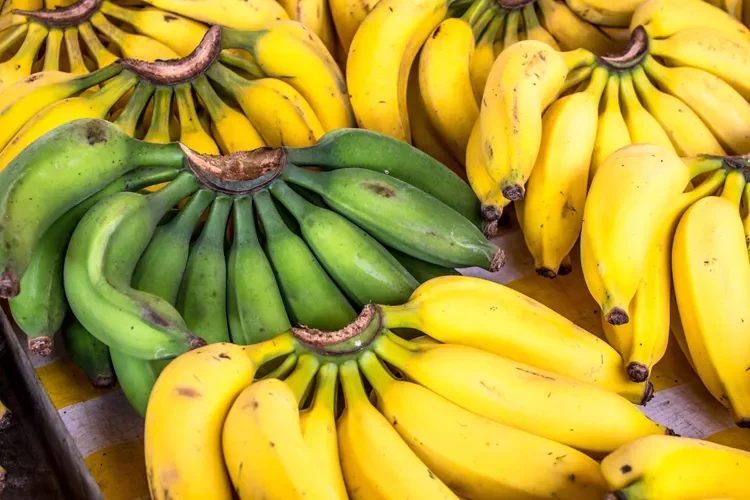
Credit: Alfribeiro / Getty Images
Researchers found that mining waste from the 2015 Mariana dam disaster persists in soil and water, entering local crops — indicating ongoing contamination.
Researchers found that bananas, cassava, and cocoa grown near the 2015 Fundão dam collapse site contain elevated levels of toxic metals, including cadmium and lead.
The study found that consuming bananas from the Doce River estuary area could pose health risks to children, and that cassava and cocoa also had concerning metal concentrations.
Although most U.S. bananas come from Central America, the findings underscore how industrial pollution can contaminate crops and threaten food safety long after an environmental disaster.
In 2015, the Fundão tailings dam, an embankment built to store byproducts of iron mining, collapsed in Minas Gerais, Brazil. The collapse caused what many call the "worst environmental disaster" in the nation's history. And today, that's very bad news for people who love to snack on Brazilian bananas.
At the time of the incident, the collapse triggered a mud wave that washed over and buried the nearby town, killing 19 people, displacing hundreds, and eventually reaching the coast, where it damaged coral reefs, mangroves, and beaches, and soon after, farmland as well. Now, researchers in soil science, environmental engineering, and public health from the University of São Paulo, the Federal University of Espírito Santo in Brazil, and the University of Santiago de Compostela in Spain are uncovering the long-term consequences.
In late 2025, the team published the findings of their study on whether crops grown near the site, specifically at the Doce River estuary, are safe for consumption, in the journal Environmental Geochemistry and Health.
Specifically, the team stated that they focused on bananas, cassava, and cocoa pulp grown in soil affected by the disaster. To determine whether the produce had been negatively affected, they examined levels of cadmium, chromium, copper, nickel, and lead, metals linked to iron oxides, which they explained, "are the primary components of the tailings." And, as they found, eating a banana from the region may indeed pose health risks, especially to children.
"Our group has been studying the impacts of the dam collapse for years. We obtained the first samples seven days after the accident and immediately understood that there was an imminent risk of contamination of plants, soil, water, and fish," Tiago Osório, an agronomist and professor in the Department of Soil Science at the Luiz de Queiroz College of Agriculture at the University of São Paulo, said. "But the question remained: Does this contamination pose a risk to human health?"
In their work, the team explained how the plants absorb these "potentially toxic elements," known as PTEs, from mining waste and eventually store them in their edible tissues, which end up on grocery store shelves.
"The iron oxide content in the soil, which is the main constituent of the tailings, correlates with its content in the plant," PhD researcher Amanda Duim Ferreira explained. "We studied the passage of constituents from the tailings in the soil to the water, and then from the water to the plant, including its leaves and fruits."
To measure the exact contamination levels, the team collected soil and plant samples and subjected them to a washing and weighing cycle. They then separated the edible portion from the rest of the plant and dried it into a powder.
"We dissolved the 'plant powder,' transforming it into a solution using various acids, and determined the concentration in the solution," Duim Ferreira said. "We converted the calculation of the concentration of material in the solution and compared it with the weight of the diluted material, thus obtaining the PTE concentration in milligrams per kilogram of dry biomass."
As the researchers found, in both bananas and cassava, nearly all PTEs except chromium were present at higher concentrations in the roots and tubers. Cocoa, however, showed a different pattern, with higher levels in its stems, leaves, and fruits. They added, "In cocoa pulp, copper and lead concentrations exceeded limits set by the Food and Agriculture Organization of the United Nations (FAO)."
"These elements exist naturally in the environment," Tamires Cherubin, a health sciences Ph.D. and co-author of the study, said. "We're exposed to them in lower concentrations. But in the case of a disaster like the one in Mariana, when exposure is expected to increase, we need to exercise extra caution." That's because at higher levels they can lead to a host of health issues, including kidney and heart problems, gastrointestinal discomfort, and, if inhaled, lung damage, too.
With this "extra" caution, the team also calculated the risk quotient (RQ), risk index (RI), and total risk index (TRI) for people consuming bananas, cassava rhizomes, and cocoa pulp. They also evaluated the risk for children under six and adults separately. After factoring in how much locally grown food residents consume and considering long-term exposure, as well as differences in weight between children and adults, the team found that, for most metals, the TRI was below 1, indicating no significant risk to adults. However, the TRI for bananas exceeded 1 for children, specifically for cadmium, "signaling possible health concerns."
"Over time, considering the life expectancy of around 75 years, there may be a carcinogenic risk since there's a possibility of direct and indirect DNA damage," Cherubin said. The researchers added that this damage could increase the risk of certain cancers affecting the central nervous system, digestive tract, and blood-forming tissues. However, "It all depends on the human body's ability to absorb and metabolize these elements that are available in the environment."
For U.S.-based consumers, there is slightly less concern. According to data from the American Farm Bureau, while most bananas consumed in the United States are grown in Central and South America, they typically come from Guatemala, which supplies 40% of our banana imports, followed by Ecuador and Costa Rica, each contributing 16%. However, Brazil is among the top 10 banana-producing nations in the world, meaning you're likely to encounter one of its bananas if you travel often.
Furthermore, this study is the latest to demonstrate that fruits and vegetables can become contaminated by soil pollutants. In October, Food & Wine reported on another study showing how microplastics can bypass plants’ natural root barriers and accumulate in edible vegetables, such as radishes, further highlighting the importance of taking care of our soil so it can take care of us.