
What Happens When Microplastics Meet Water? Scientists Uncovered a Potential Source of Cell-Damaging Molecules
Source: Food&Wine
By: Stacey Leasca
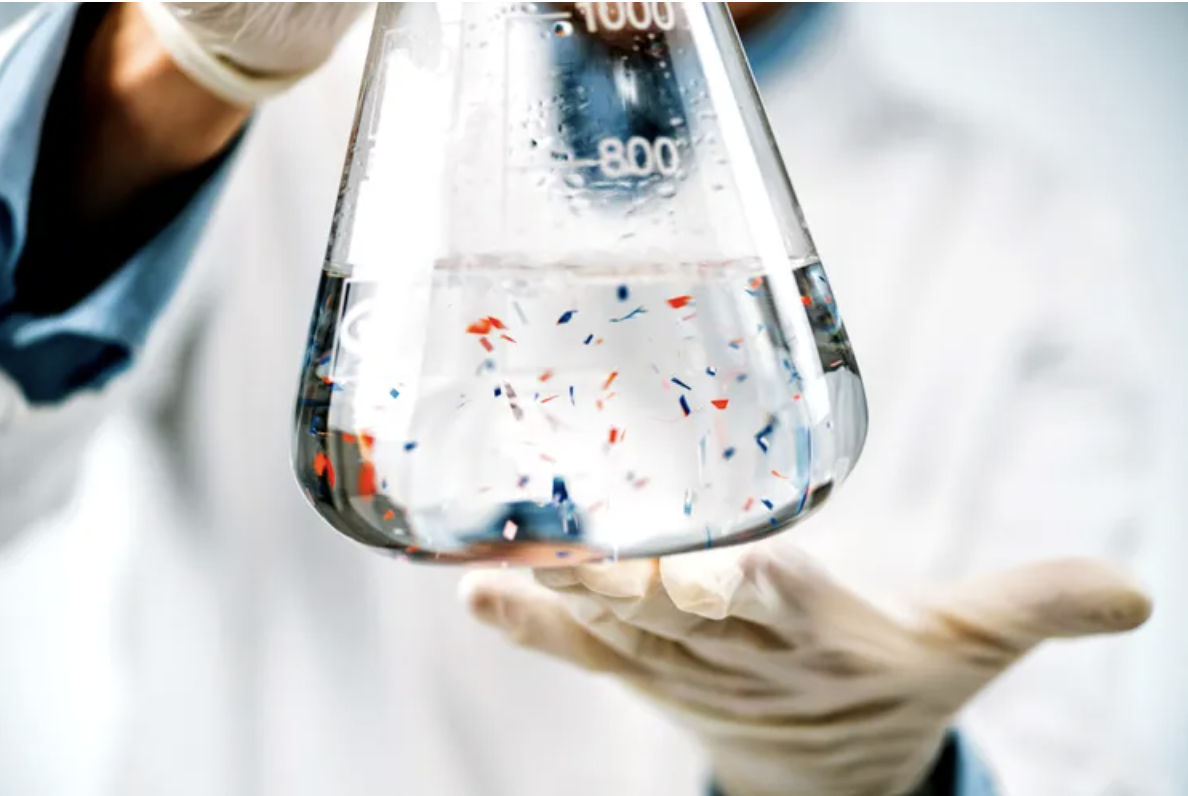
Credit: Photo by Microgen
Researchers tested six common plastics and found that the materials used in grocery bags and yogurt cups were among the most chemically active.
A new study found that microplastics can react with water to produce hydroxyl radicals, highly reactive molecules known to damage cells.
Researchers tested six common plastics and found that all produced hydroxyl radicals, with polyethylene and polypropylene showing the most chemical activity.
In laboratory experiments, researchers observed proteins clumping on microplastics and mouse red blood cells breaking apart after contact with plastic particles, but the findings do not establish whether this process harms humans.
In recent years, there’s been a lot of news — including extensive coverage here at Food & Wine — about how microplastics are turning up everywhere, from inside fish and vegetables freshly plucked from the ground to even human hearts. But how they might be harming our health has been much less clear. Now, scientists from Columbia University and the University of California, Berkeley, think they may have an answer.
In October, researchers published a study in the journal Nature showing that microplastics can react with the water around them. The reaction produces a highly unstable molecule called a hydroxyl radical, which is known to damage cells. The finding is surprising because plastic has long been considered inert — it reacts with very little, which helps explain its durability. But this reaction may also help explain why microplastics (bits smaller than 5 millimeters) appear to cause harm.
To understand their effect, the researchers first mixed tiny polystyrene particles (the material used in foam cups and takeout containers) into water tinted with an orange dye that breaks down when these unstable molecules are present. Over 10 days, the water went from pale yellow to almost clear, with nearly 90% of the dye gone. When they tried the same experiment in other liquids, like ethanol, the dye stayed consistently the same hue.
“Water is a key active player here, rather than just a spectator,” Wei Min, a Columbia professor of chemistry and biomedical engineering, said in a statement from the university.
Overall, the researchers tested six everyday plastics, and each produced the damaging molecules. The most water-repellent plastics, such as polyethylene and polypropylene (used to make grocery bags, milk jugs, and yogurt cups), were the most active, whereas the plastic used in water bottles and acrylic were the least active. According to the Berkeley team’s computer models, water behaves slightly differently when it touches these plastic surfaces, making it easier for those harmful molecules to form.
What are microplastics and nanoplastics?
Plastic doesn’t always stay in one piece. Over time, it can break into tiny particles, some of which are too small to see with the naked eye. (Others are made that small to begin with.) The main difference between microplastics and nanoplastics is size, although researchers don’t all agree on where to draw the line. Their shape, the type of plastic, and any added chemicals also vary — so size is only part of the picture when it comes to possible health effects.
Microplastics: Plastic pieces generally smaller than 5 millimeters, roughly the width of a pencil eraser. Some are visible to the naked eye; others require a microscope.
Nanoplastics: Even smaller plastic particles, often defined as less than 1 micrometer. For comparison, a human hair is about 70 micrometers wide.
“As plastic fragments into smaller and smaller particles, its surface area increases enormously,” Min said. “Then microplastics change the water that surrounds them, generating high-energy, reactive radicals that very likely contribute to biological damage that we see in animals and potentially in humans as a result of microplastic exposure.”
After the researchers figured out how it happens, they next examined whether it had the potential to hurt living things. To do so, the researchers added a protein found in egg whites to the mix, which began clumping up on the plastic. They then added caffeine, which soaked up the unstable molecules and stopped most of the clumping. (Before you read this as caffeine being able to do the same in your body, please note the team used this as a lab tool, not a cure.) They also observed red blood cells from mice breaking apart after touching the plastic. The more active the plastic, the more damage it caused. Still, the team framed this as a “functional hypothesis,” not conclusive proof that these molecules directly cause disease or harm human tissue.
“Various uses and processes in our daily lives can also generate microplastics, including microwave heating, sunlight exposure of bottled water during storage, and IV injections in healthcare settings,” co-author Beizhan Yan added. “This foundational work provides a potential pathway for understanding their health impacts.”
Yes, this sounds scary, but think of it this way: It’s better to know thy enemy so we can change its behavior. As Teresa Head-Gordon, a UC Berkeley chemist whose lab ran the computer models, said, the work could lead to “redesigning the chemistry of these commodity plastics to reduce the toxic outcomes on health and the environment.”