
Consumer Reports Tested Baby Food for Microplastics for the First Time. Every Puree Had Them
Source: Food&Wine
By: Korin Miller
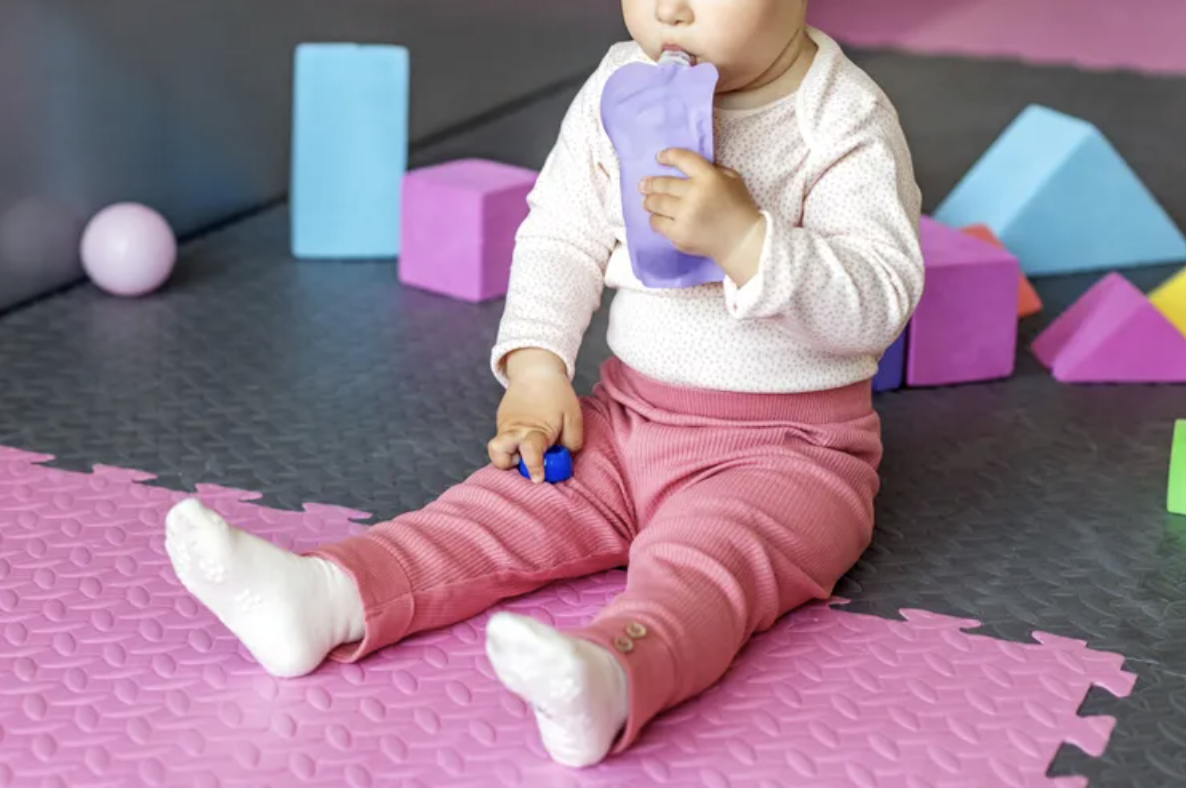
Credit: Olha Romaniuk / Getty Images
The good news: Levels of some contaminants are improving, though heavy metals and phthalates still turned up in some products.
Consumer Reports found microplastics in every baby food puree tested, with one containing more than 814,000 particles per serving.
Heavy metal levels have declined, though some products still contained concerning levels of inorganic arsenic. Phthalates were detected in 81% of products but remained below the regulatory thresholds Consumer Reports used for its formal risk assessment.
The health effects of microplastics remain unclear, and experts recommend reducing exposure where practical. Offering babies a variety of foods may also help limit repeated exposure to contaminants from a single food source.
Over the past few years, it’s become clear that, like some adult foods, baby foods may contain heavy metals, phthalates, and other contaminants most people would rather not ingest. While a new Consumer Reports study suggests that levels of some contaminants are improving in baby food, it also looked, for the first time, for microplastics in these products.
The results were not pretty.
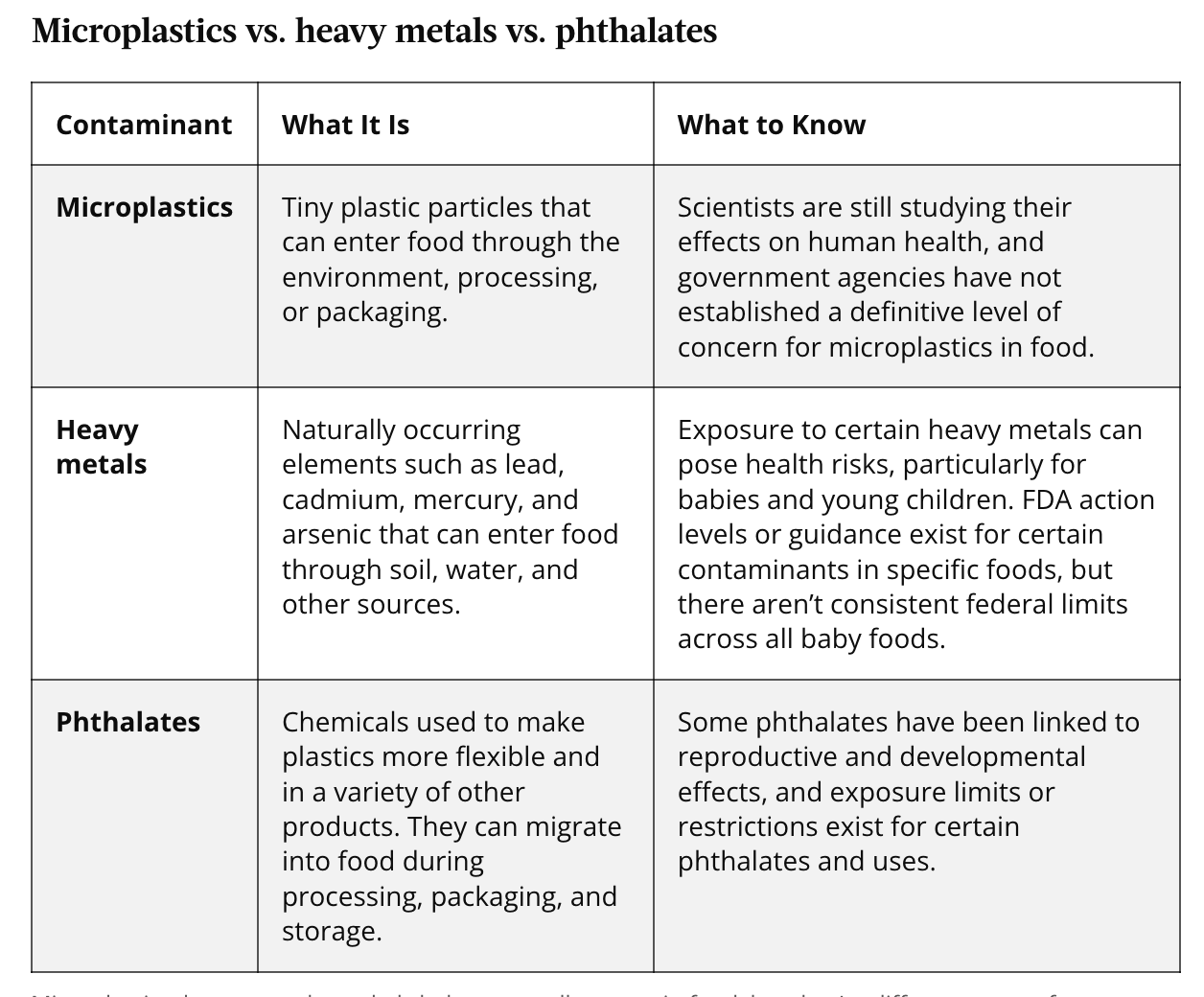
Consumer Reports found microplastic particles in 100% of the baby food puree samples tested, with the highest amount exceeding 814,000 particles per serving. That wasn’t the only thing the report detected. Unfortunately, heavy metals and phthalates still appear in some baby food products.
Previous Consumer Reports investigations, published in 2018 and 2023, found concerning levels of heavy metals, including lead, cadmium, mercury, and inorganic arsenic, in packaged baby foods, says Sana Mujahid, PhD, senior manager of Food Safety Research and Testing at Consumer Reports. “Since those tests, the FDA has updated action levels and guidance for specific foods like infant rice cereal and apple juice, and some states have increased transparency around heavy metal testing,” she says. “However, the federal government has yet to establish consistent, overarching regulatory limits for contaminants across all baby foods.”
It’s easy to panic after learning that microplastics are widespread in baby purees, but doctors recommend keeping the findings in perspective. Here’s how these contaminants end up in baby food, plus how to lower your exposure — within reason.
What Consumer Reports found in its latest baby food tests
For the report, Consumer Reports investigators analyzed 48 store-bought baby foods from 11 brands, including cereals, puree pouches and jars, puffs, bars, and more.
Investigators found that although some products still contained heavy metals, overall levels declined. Specific products, such as Gerber Rice Cereal and Target’s Good & Gather Organic Banana Peach Apricot Tub, still exceeded daily concern limits for inorganic arsenic. “Heavy metals were below CR’s levels of concern in 96% of products tested, a sign of progress since our last tests,” Mujahid says. “But detectable amounts were still common, and a few products had concerning levels of inorganic arsenic.”
Phthalates, a group of man-made chemicals used as plasticizers, were detected in 81% of the products tested. Of those, about 40% exceeded guidelines for hormone disruption. Still, Mujahid says these “remained below the regulatory thresholds CR used for its formal risk assessment.”
But one of the most surprising findings was the presence of microplastics in all purees tested. Investigators found microplastics in purees sold in both plastic and glass packaging, though particles were less common in glass jars than in plastic containers.
How microplastics get into baby food
While the presence of microplastics in 100% of the tested purees may seem surprising, doctors aren’t shocked. “Manufacturing processes, including mixing, cutting, and pureeing of baby food ingredients, may involve the use of plastic components that can release microplastics into the final food products,” says Kelly Johnson-Arbor, MD, a toxicologist at MedStar Health.
Baby foods may also contain water contaminated with microplastics from environmental surface runoff, plastic-based plumbing pipes, or water purification processes that involve plastic, Johnson-Arbor says. Baby food packaging, including pouches, liners, and lids, may also contain plastic that leaches into purees, she points out.
Even protective clothing and masks worn by employees can shed plastic fibers that end up in baby foods, says Mujahid. Microplastics are also “almost ubiquitous” right now, making them difficult to avoid, whether in baby food or other products, says Jamie Alan, PhD, an associate professor of pharmacology and toxicology at Michigan State University.
“Microplastics everywhere,” says Gina Posner, MD, a pediatrician at MemorialCare Medical Group in Fountain Valley, California. “They’re in some fresh fruit and vegetables — they’re getting absorbed by things from the soil. It’s not a surprise that you’re going to have microplastics in baby food.”
How concerned should parents be about microplastics in baby food?
Government regulatory agencies have not established a level of concern for microplastics, making it difficult to determine the health effects of that exposure.
“The widespread presence of microplastics in our daily environment is alarming, but the exact human health effects of microplastics remain largely unknown,” Johnson-Arbor says. “Scientists are still studying all of these effects, and the true significance of microplastic exposures on human health requires much more investigation.”
Alan agrees. “At this point in human history, I see this as minimizing exposure and not eliminating, realizing that eliminating microplastics will be almost impossible at this point,” she says. “You can minimize in many ways and food is only one way you can minimize.”
Simple ways to reduce your baby’s exposure to microplastics
Doctors say it’s important to do what you can. “You can’t live in a bubble. You and your kids are going to eat microplastics, and you can’t avoid it,” Posner says. “But you can avoid taking in excess amounts.”
That means doing things like minimizing plastic water bottle use and storing food in non-plastic containers, she says. “That can make your intake of microplastics significantly lower,” Posner says.
Alan suggests minimizing exposure wherever possible. “Filter water that you mix with formula, buy cotton bed sheets, buy diapers with less plastic and more cotton,” she says. “Do the best you can with the resources you have.”
Also: Offering a variety of foods helps support balanced nutrition and may help prevent repeated exposure to contaminants from any single food source.
But Johnson-Arbor says it’s important not to panic over the findings. “Infants and children need to eat in order to thrive, and it’s likely that their food — as well as ours — will contain microplastics, knowing how widespread these are in our daily lives,” she says. “There’s only so much you can control,” Posner says. “The goal is just to try and minimize your exposure.”