
The Art of “Complex Simplicity”: Chef Daniel Negreira on Pure, Additive-Free Gastronomy
The Spanish culinary master proves that the ultimate luxury on the plate is honesty.
Inside a chilled tulip glass rests not grappa, but a vibrant, velvety Spanish gazpacho, radiant in amber-gold hues. Lift the glass and breathe in gently: the crisp, garden-fresh fragrance of sun-ripened tomatoes, cucumbers, and sweet bell peppers, seamlessly interwoven with the rounded, fruity perfume of extra virgin olive oil and the faintly tart, mellow aroma of wine vinegar. Before a single drop touches your lips, you’re already intoxicated.
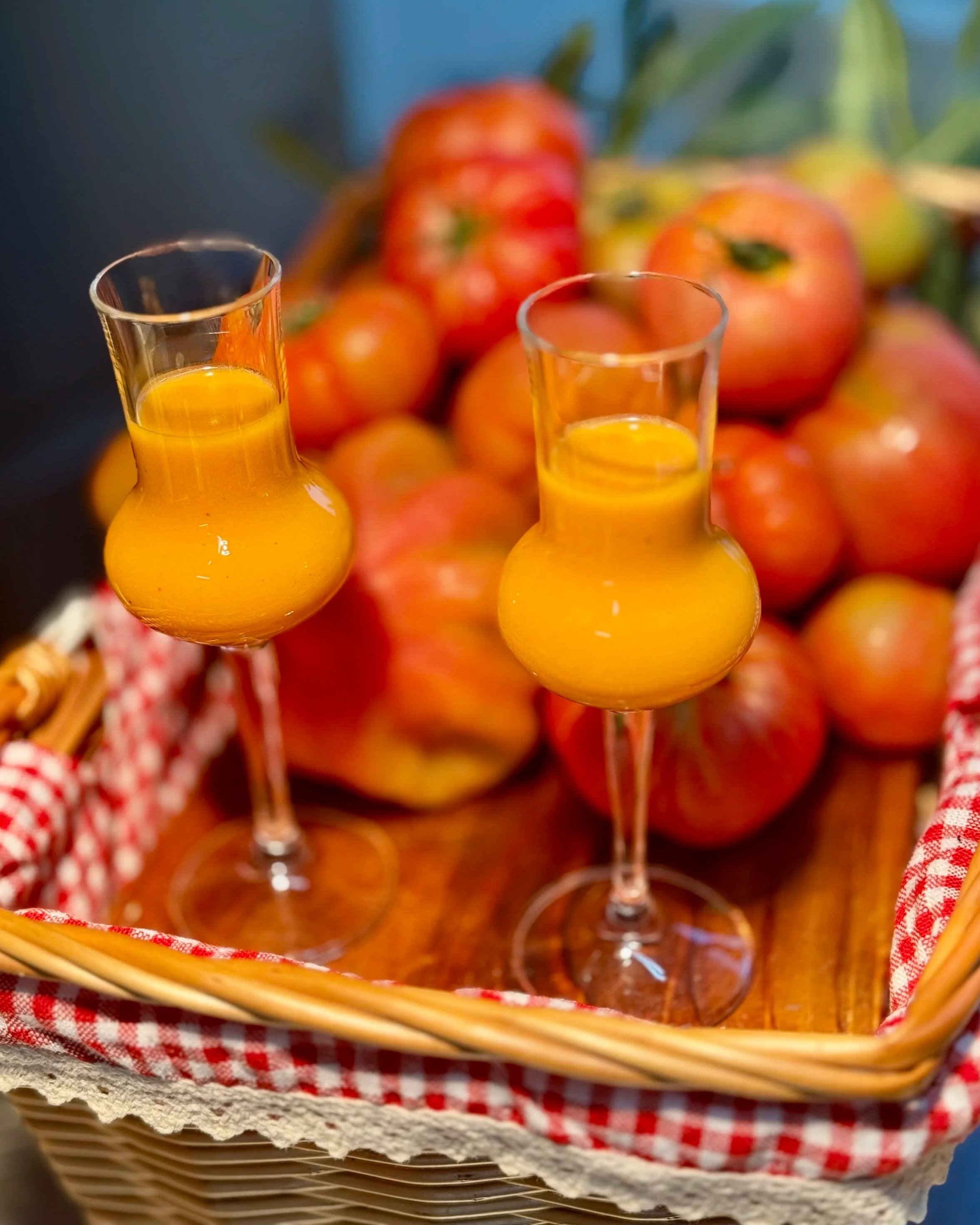
At the first sip, the bright natural acidity of vine-ripened tomatoes unfolds alongside the refreshing sweetness of cucumber and pepper, underscored by the faintest whisper of garlic that builds layer upon layer across the palate. Close your eyes, and the warmth of the Spanish sun comes vividly to life—sea breezes drifting across a fruit-laden countryside. This authentic gazpacho, distilled to pure essence, stands as a testament to international chef Daniel Negreira’s additive-free culinary philosophy.
Honesty on the Plate: Elevating Humble Ingredients into Additive-Free Delicacies
“This is what I call ‘complex simplicity,’” Negreira explains. “A dish that looks extremely simple, but becomes extremely complex after the first bite. That is what we strive to achieve with every recipe we present.”
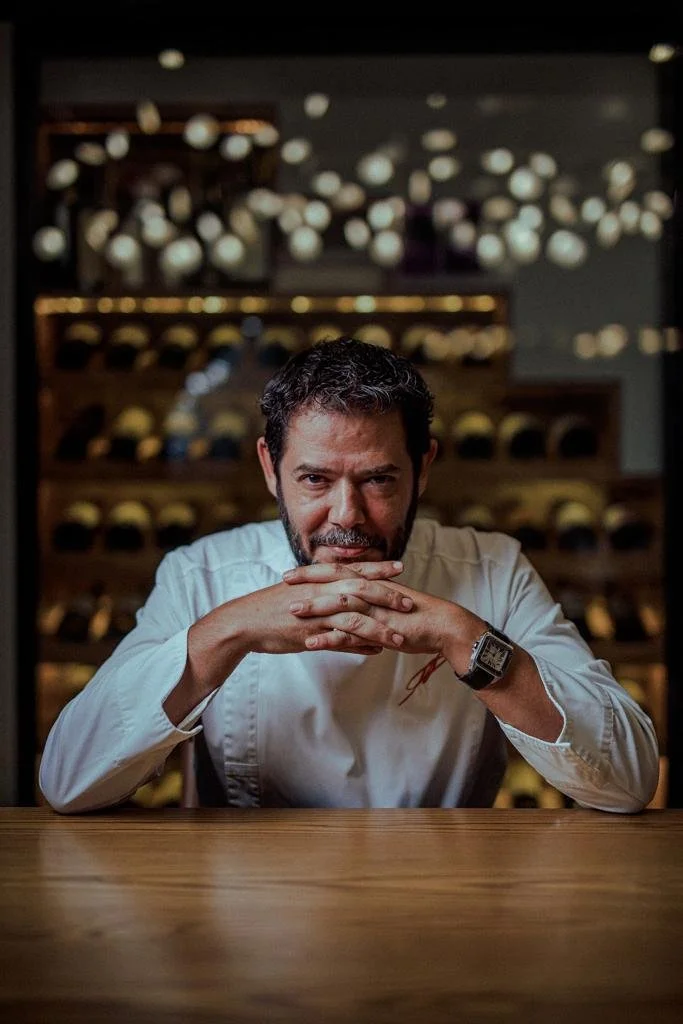
Born in Galicia and steeped in the modern culinary traditions of San Sebastián, Spain’s gastronomic capital, Negreira has long earned global acclaim. Early in his career, he was named Best Young Chef of the Basque Country in 2006 and captured the Silver Medal at the prestigious Bocuse d’Or in 2007. After relocating to Asia, he expanded his culinary footprint, earning Michelin recommendations and the Spanish government’s official “Restaurants From Spain” certification. Today, he helms Calma (宜自若), an intimate private dining restaurant with only a handful of seats in Yilan, Taiwan.
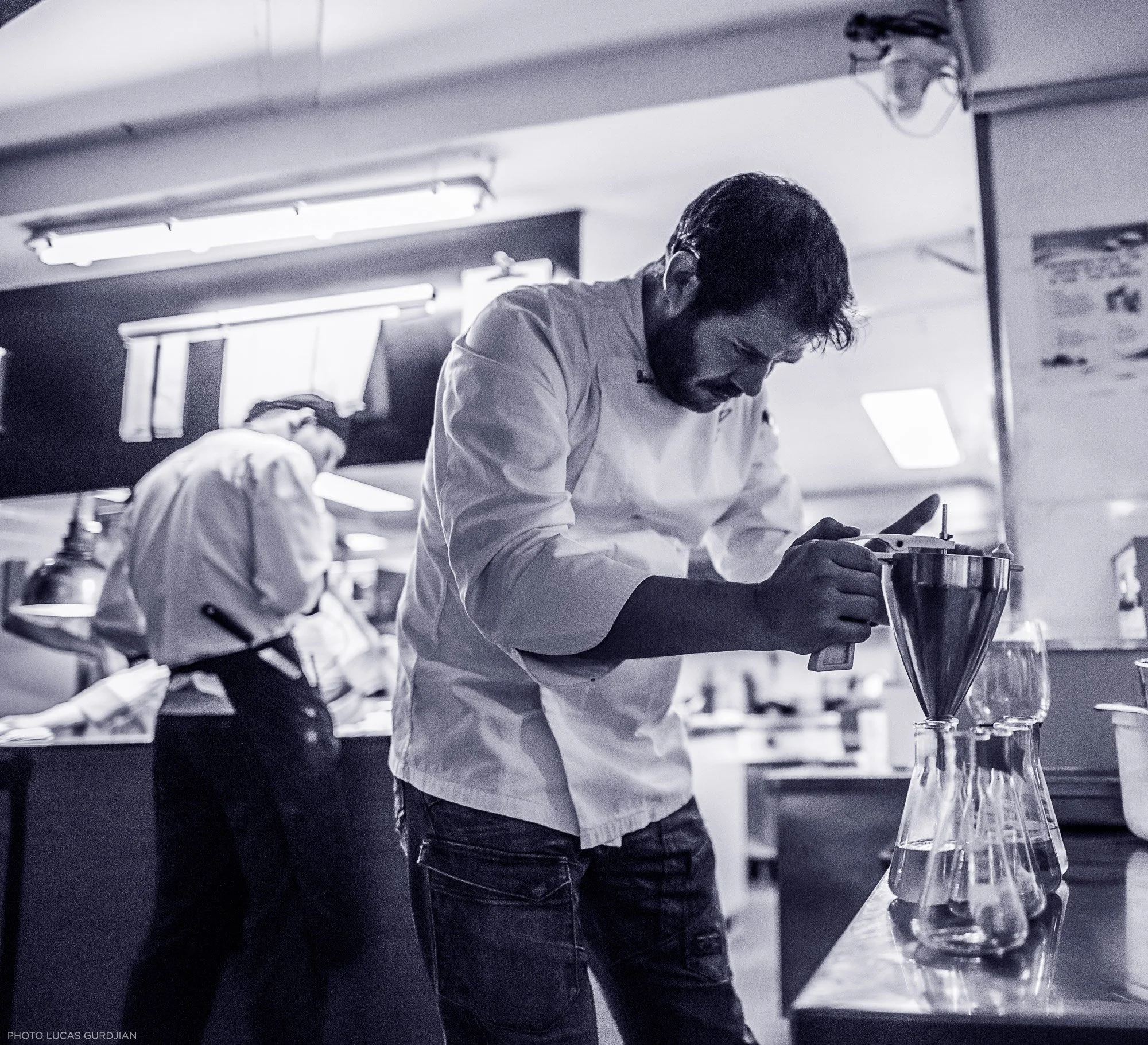
Negreira recalls his mentor, culinary legend Juan Mari Arzak, who used to tell him: “If you can wow someone with just a potato, then you know you achieved your peak as a chef.” He holds it as gospel. While his dining room welcomes some of the wealthiest people in Taiwan, nothing compares to taking an ordinary onion, focusing purely on its raw essence without a single additive, and transforming it into an unforgettable dish. He says seeing guests respond with genuine wonder and understanding is the ultimate reward.
“If you look at our menu, probably half of it is made out of simple, common ingredients,” Negreira shares with quiet pride. “Yet guests keep coming back again and again, looking for that simplicity.” In his view, discerning diners today yearn for “honesty” on the plate—not an over-engineered composition crowded with countless elements that leaves them asking: “What did I just eat?”
Attuned to the 24 Solar Terms: Interpreting Taiwan’s Terroir through Spanish Technique
While luxury imported goods often serve as the defining badge of fine dining, Negreira maintains an uncompromising devotion to local terroir. “Locality means season,” he asserts. “We adapt to those products that are outstanding in Taiwan across its twenty-four solar terms, applying Spanish techniques to get as close as possible to the Spanish standard in my memory.” Working closely with neighboring farmers, he learns from their agricultural wisdom and sources produce imbued with their dedication, giving his cuisine an authentic, vibrant heartbeat.
Hailing from Galicia—one of Spain’s most storied coastal seafood regions—Negreira holds the freshness of his seafood to an almost unforgiving standard. Nearly all—99 percent—of the seafood served at Calma comes directly from Daxi Fishing Harbor, just thirty minutes north of the restaurant. He has worked with the same fishermen for over a decade, and they know his standards by heart. “The deal is simple: bring your best, charge your prime,” he says. He insists on never bargaining, paying top dollar to honor their tireless labor at sea and their discerning eye.

One of the "aunties," Ms. Tsai, who helps Chef Negreira select seafood at Daxi Harbor.
AdditiveWhen it comes to seafood, Negreira points to his native classic, Pulpo a Feira (Galician market-style octopus), as the quintessential example of additive-free mastery. The dish relies on only four basic ingredients: octopus, sea salt, pimentón (Spanish paprika), and extra virgin olive oil.
“The precise control of temperature and time is the key to achieving unbelievable textures without needing external additives,” Negreira explains. “If you cook the octopus too hot for too long, it turns chewy and mealy; too hot without enough time, and it becomes too hard. But if you get it right, the octopus turns into a delicacy that very few other things can rival.”
Forsaking Additive Shortcuts: The Crucible of Experience, Craft, and Time
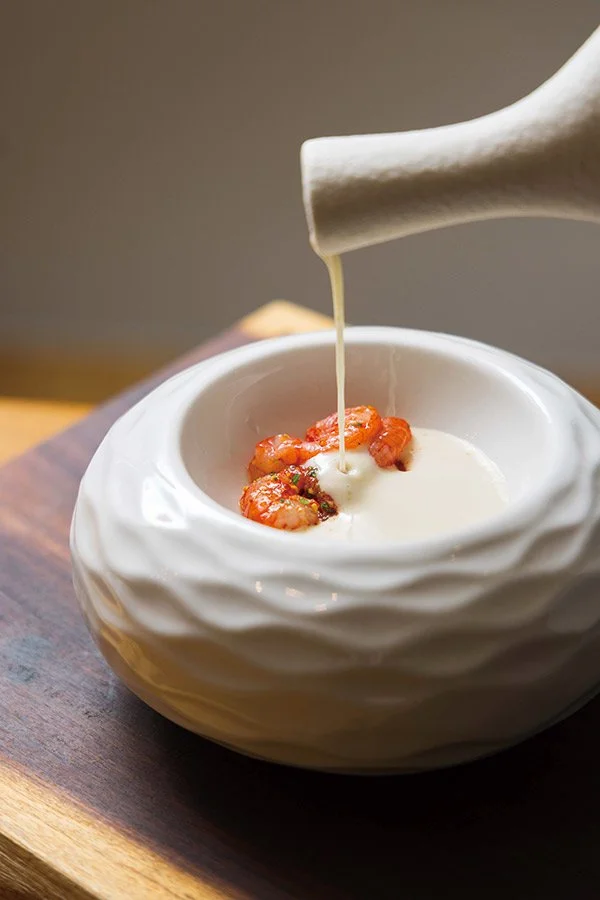
The perfect embodiment of “complex simplicity” in Chef Negreira’s eyes: high-quality local carabineros with a very subtle marinade, served with an almond soup.
Dispensing with artificial shortcuts often presents higher hurdles in flavor consistency, shelf life, and aesthetics. Negreira embraces the challenge head-on: “When you deprive yourself of shortcuts, you replace those shortcuts with skill and experience.”
He recalls his grandmother, who first planted his culinary seed during childhood family lunches. She didn’t have nearly as many additives as many chefs have today, “yet that never stopped her from making outstanding dishes for our family,” he says, smiling. Beyond technique, he underscores the irreplaceable element of patience: “We live in a society that demands everything in a rush, but cooking demands time to achieve flavor depth and palate complexity.”
He notes that consistency is born of instinct and experience. Tomatoes never taste the same from one day to the next; a deceptively simple tomato sauce cannot rely on a static formula, but requires the calibrated touch of a seasoned chef to maintain its harmony. In terms of preservation, modern culinary vacuum sealing, combined with his habit of cooking fresh every day, makes shelf life hardly an issue at Calma.
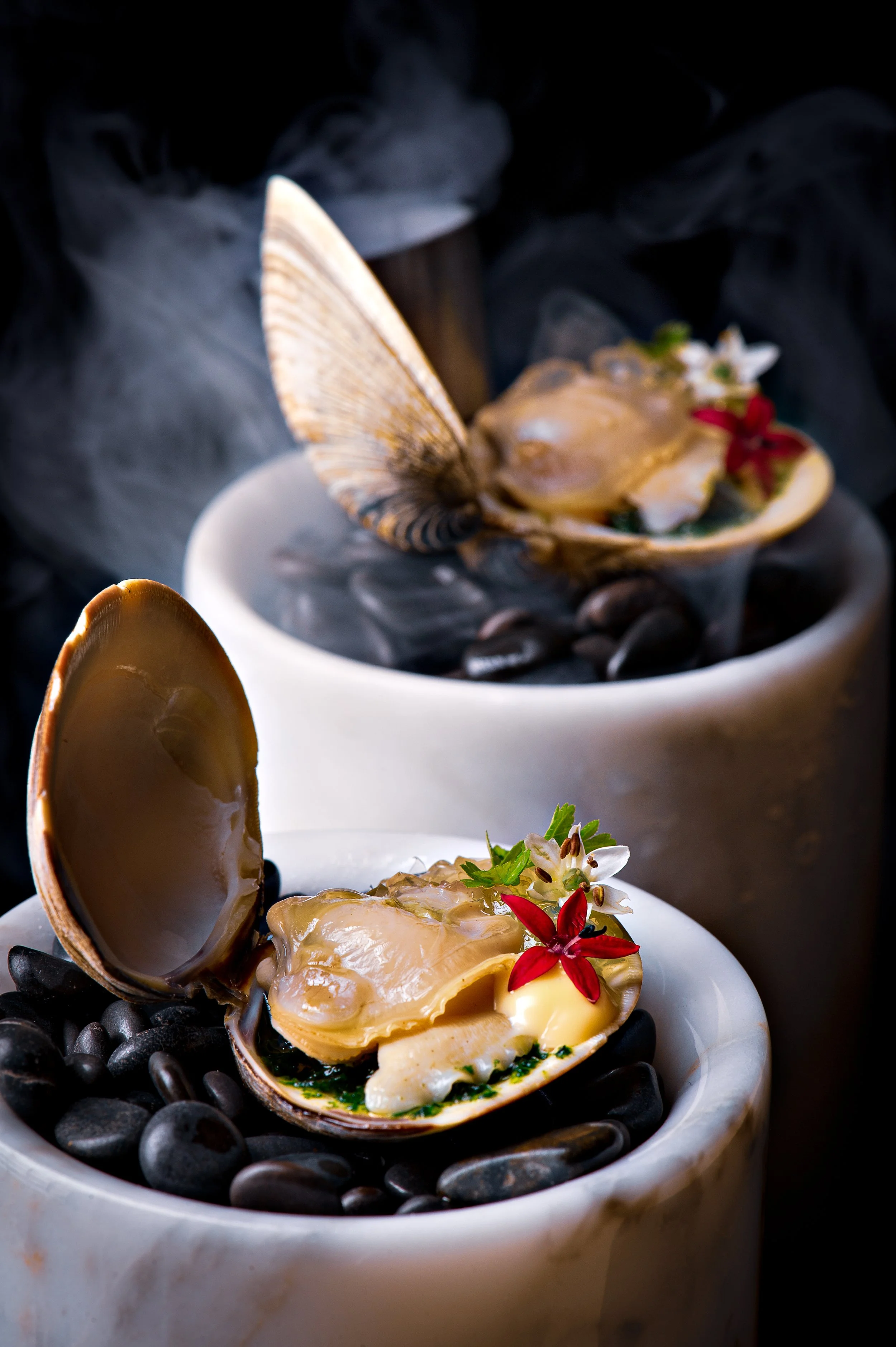
One of Chef Negreira’s creative dishes: local giant clam, smoked and then confited in goose fat, finished with a martini jelly garnish.
Visual elegance, meanwhile, is the easiest part—the natural reward of adhering to “complex simplicity.” To showcase each dish, Negreira has amassed a collection of roughly 3,800 pieces of tableware across more than 300 distinct designs—all to serve just 12 guests per seating. Plating requires neither contrived theatricality nor visual trickery; a thoughtfully designed vessel that harmonizes with the ingredient is all that it takes to achieve astonishing visuals.
Partnering with the Anti Additive Clean Label Organization: A Sincere Vision of Clean Food for the Next Generation
How, ultimately, should great gastronomy be defined? In Negreira’s heart, it rests on three pillars: uncompromising quality, simplicity, and an absolute focus on the primary ingredient. “If you can add the element of ‘surprise’ to a dish, that achieves my ultimate goal: to create a memory—something that will last in someone’s life forever.”
Invited by A.A.—the Anti Additive Clean Label Organization, an international independent third-party certification body—to join its Honorary Advisory Board, Negreira found an effortless alignment with its ethos. The organization’s advocacy mirrors his dedication to honesty and simplicity in the kitchen. As a father, he wants his children to inherit a food landscape defined by clean, natural choices. “Somehow, we are the masterminds behind the future food that next generations will enjoy,” he reflects. “If we can create a better experience for them, that is a great achievement.”
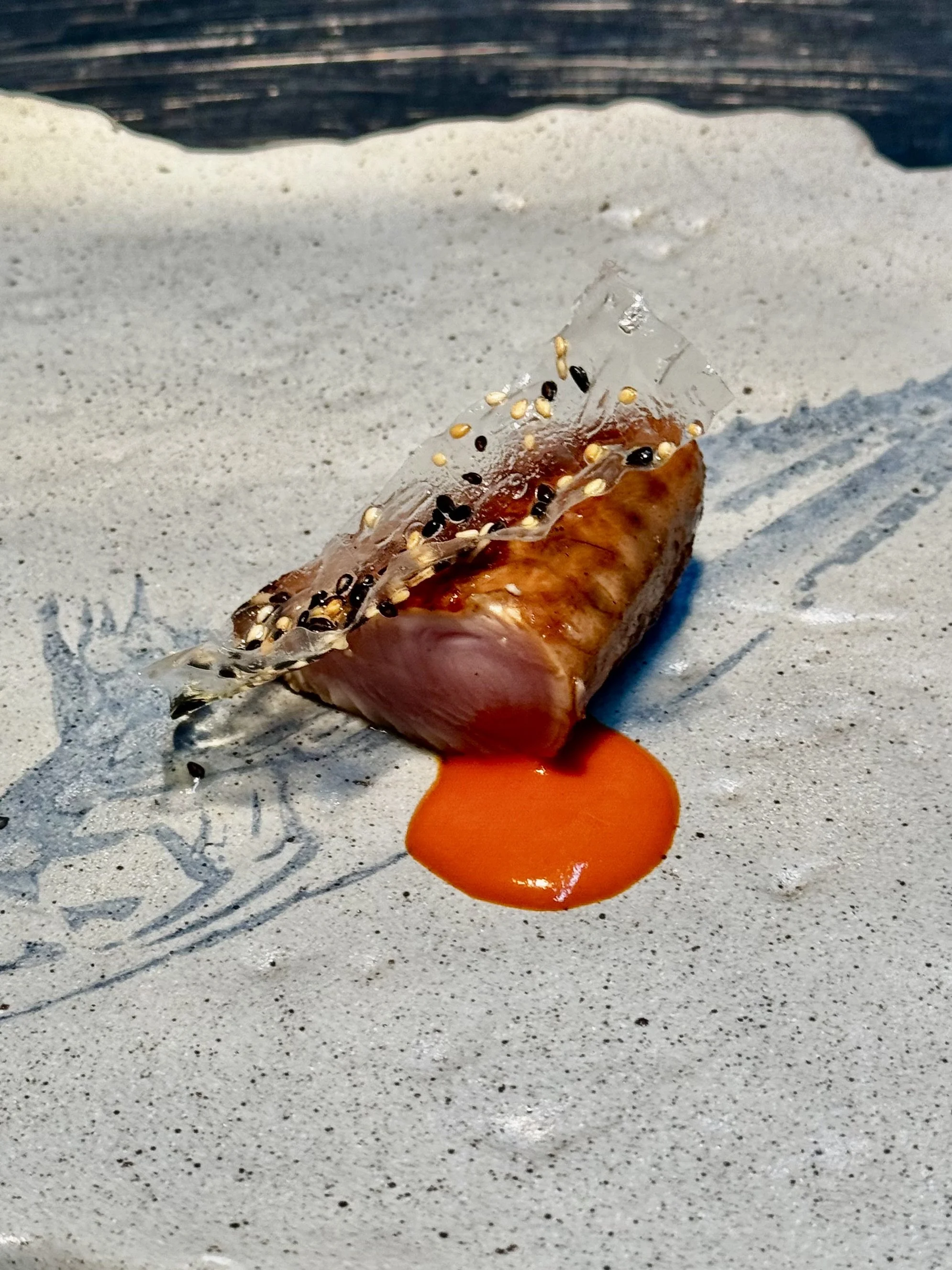
One of Chef Negreira's favorite dishes to serve: local tuna tataki with a translucent rice crackers and Spanish piquillo pepper sauce.
Above all, Negreira’s vision for the future of food comes down to a single, uncompromising principle: Honesty. “Let’s go back to that time when a tomato was ‘ugly,’ tasted like a REAL tomato, and not like a red rubber lab beauty.” Negreira speaks with sincerity, his gaze unwavering.